

Standardized Glass-Lined Reactor Design: What Facilities Need to Know
Glass-Lined Reactor Design and Industry Standards
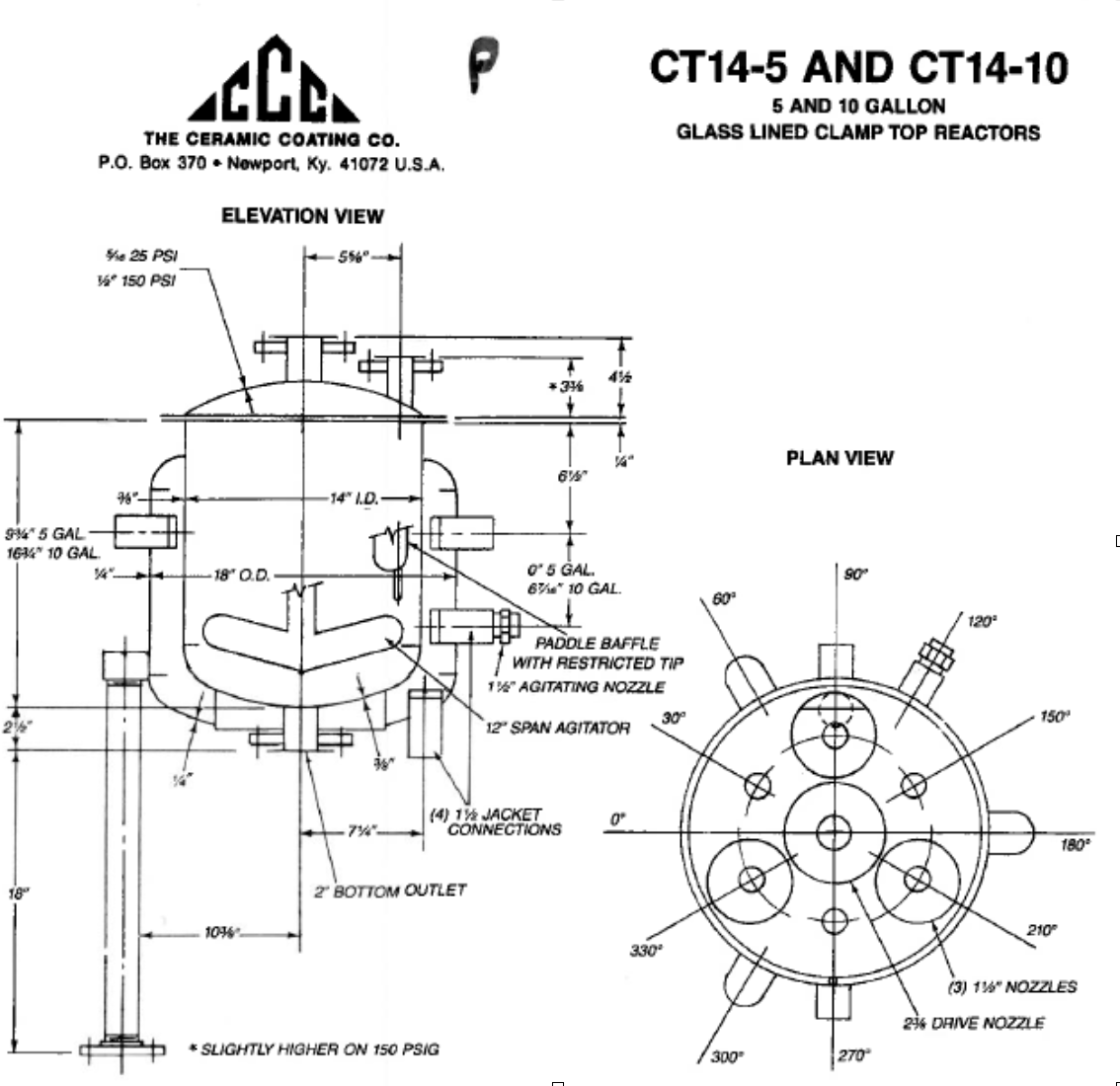
Glass-lined reactor design has become increasingly standardized across the global process equipment industry. With only limited exceptions, manufacturers and facilities now work within established dimensional, mechanical, and quality standards that help ensure equipment compatibility, safety, and reliability.
Following Glasslined Technologies’ acquisition of the third-largest glass-lined equipment manufacturer in 2004, GTI acquired thousands of engineering prints covering standardized reactor designs throughout the United States and European Union.
That extensive design library, combined with decades of industry experience, gives GTI the ability to support both standardized equipment requirements and applications that call for custom vessel dimensions.
While GTI can still fabricate vessels to custom specifications, design requirements and modifications should be identified early in the process. Understanding the standards governing glass-lined equipment is an important part of that conversation.
The Primary Standards for Glass-Lined Equipment
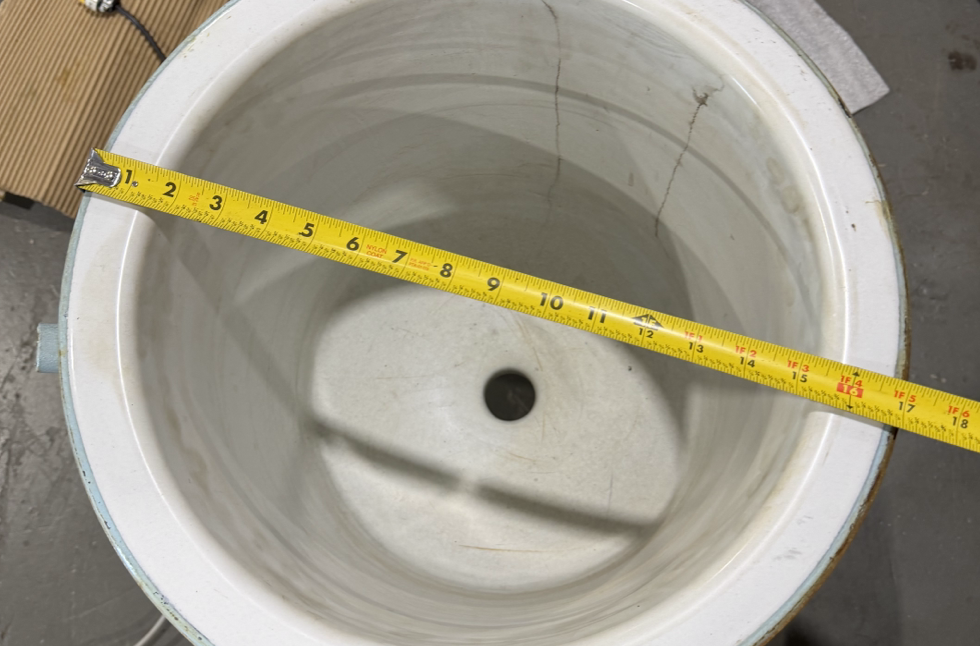
Several organizations and technical standards work together to govern the design, fabrication, testing, and operation of glass-lined process equipment.
DIN 28136
DIN 28136 serves as a primary standard for the mechanical design, principal dimensions, and nozzle configurations of glass-lined agitator vessels.
The standard identifies three primary reactor configurations:
Type AE: A two-piece reactor featuring a large main flange corresponding with the vessel shell diameter.
Type BE: A one-piece, monoblock design incorporating a manway opening and designed to provide high pressure resistance.
Type CE: A closed, one-piece configuration with a central mounting opening that allows entry of a single-piece agitator.
These standardized configurations help create greater interchangeability and consistency across equipment and installations.
DIN 28137 & DIN 28151
These standards address dimensions and geometries associated with agitator mounting flanges and jacket connections, including bolt circles and diameters.
Standardizing these components helps support equipment modularity and compatibility.
DIN EN ISO 28721-1
The glass lining itself is also subject to defined quality standards.
DIN EN ISO 28721-1 establishes requirements related to fused enamel glass linings, including coating quality, thickness, tolerances, and testing procedures such as spark testing.
The Organizations Behind the Standards
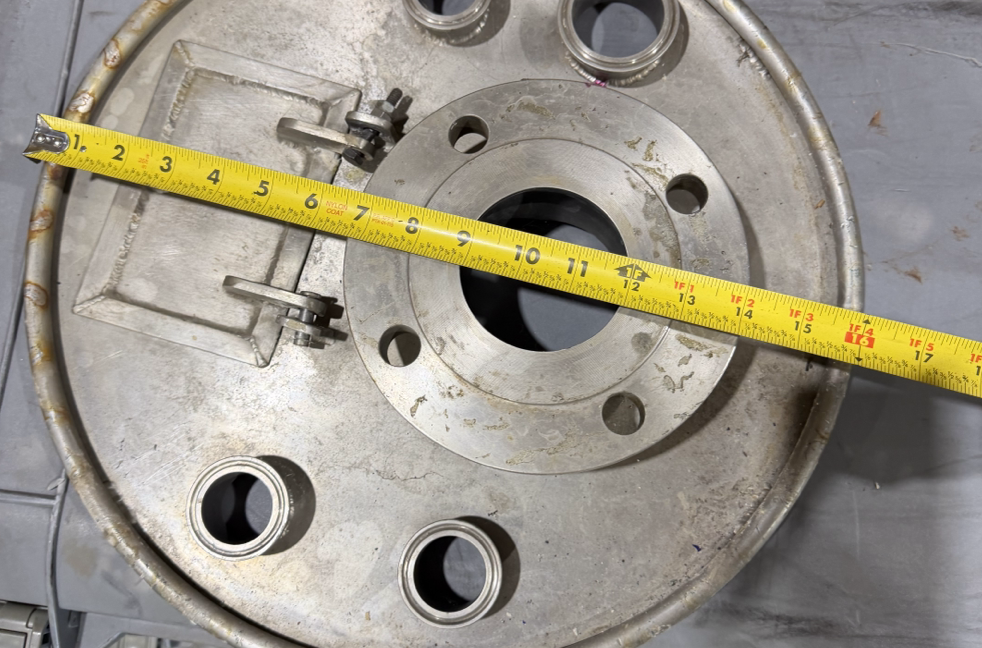
Multiple organizations play a role in establishing and maintaining the requirements applied to glass-lined process equipment.
DIN (Deutsches Institut für Normung) publishes the DIN 28136 series and provides technical dimensional requirements, tolerances, and design information.
ISO (International Organization for Standardization) develops and co-publishes internationally recognized standards related to enamel quality and testing, including ISO 28721.
ASME (American Society of Mechanical Engineers) establishes structural safety requirements for pressure-bearing steel vessels used in North America. Section VIII, Division 1 addresses pressure-vessel construction, while ASME B16.5 addresses applicable nozzle flange geometries.
As a result, vessels used in North American facilities may be constructed to satisfy ASME structural requirements while incorporating standardized DIN dimensions.
U.S. Pressure Vessel Compliance
Additional requirements apply to equipment operating within U.S. facilities.
ASME governs structural calculations and pressure-vessel construction requirements.
The National Board of Boiler and Pressure Vessel Inspectors (NBBI) provides registration and tracking of pressure vessels to document that fabrication conforms with approved ASME designs.
OSHA requirements also affect pressure-vessel safety and compliance within U.S. facilities.
Together, these requirements help provide a framework for equipment safety, documentation, and accountability throughout the vessel's service life.
ASTM Standards for Glass-Lined Systems
ASTM Subcommittee B08.12, Materials for Porcelain Enamel and Ceramic-Metal Systems, develops testing standards and quality guidelines applicable to glass linings in the United States.
Relevant standards include:
ASTM B1000: Practices related to preparation and testing of enamel-lined pipe, fittings, and valves.
ASTM B916: Testing the adherence of porcelain enamel coatings to sheet metal.
ASTM C282: Evaluating the acid resistance of porcelain enamels.
ASTM C448: Testing abrasion resistance, an important consideration for equipment exposed to agitators, slurries, and other abrasive operating conditions.
Standardized Designs, Specialized Expertise
Standardization brings significant advantages to the process industry. Established dimensions and configurations can simplify equipment specification, improve component compatibility, and provide a common engineering framework across manufacturers and facilities.
But standardized doesn't always mean one-size-fits-all.
Certain applications still require modifications or completely custom vessel dimensions. GTI's extensive library of legacy engineering prints and experience with both U.S. and European equipment allows our team to evaluate those requirements within the broader standards governing glass-lined systems.
If your facility requires modifications to an existing reactor design or has specifications for an upcoming vessel, now is the time to submit those requirements to GTI.
Our team can review your application and help determine the appropriate path forward.