

Prevent Downtime Caused by Gasket Failure
In chemical processing, even a small gasket failure can quickly become a major operational issue. What may begin as a minor leak can escalate into damaged equipment, emergency repairs, and significant production losses.
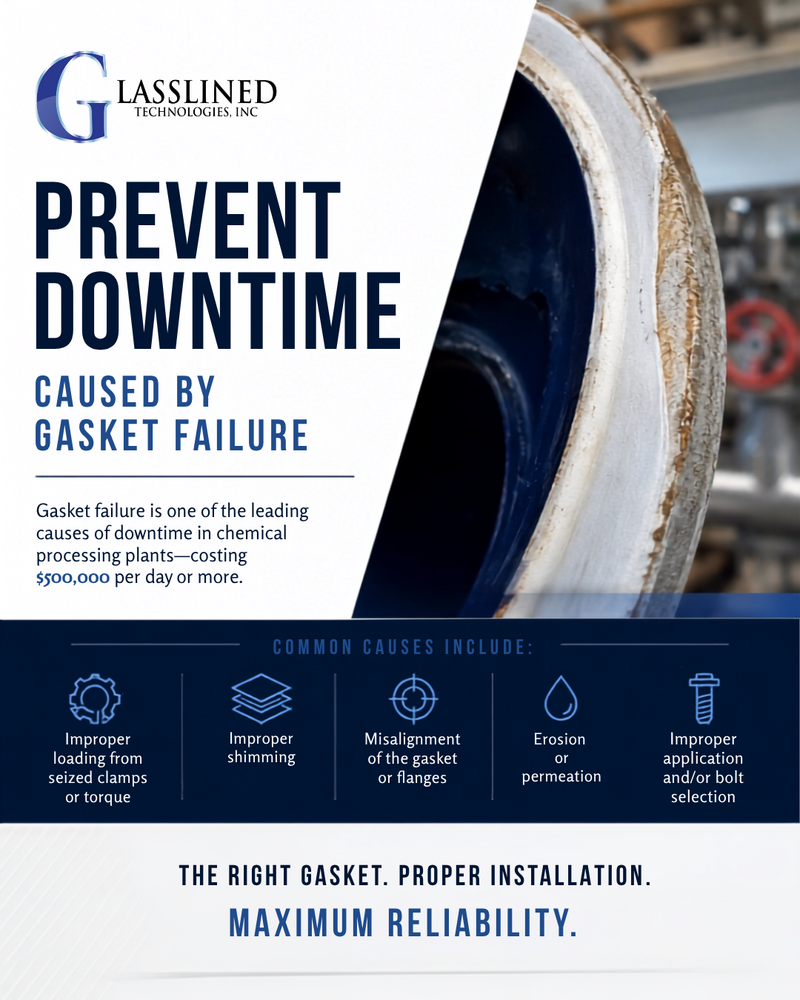
Industry estimates place the cost of unplanned downtime at $500,000 per day or more for many facilities. Preventing gasket-related failures isn't just good maintenance—it's good business.
Why Gasket Failures Happen
Many gasket failures are preventable. At Glasslined Technologies, our field experience has shown that the most common causes include:
Improper loading from seized clamps or incorrect torque
Improper shimming
Misalignment of the gasket or flange
Erosion or permeation
Improper gasket selection
Incorrect bolt installation or tightening procedures
When these issues go unnoticed, the results can be expensive.
A Small Leak Can Become a Large Repair
One recent inspection revealed a classic example of gasket failure.
After a gasket began leaking, maintenance personnel attempted to stop the leak by tightening the clamps. Unfortunately, the excessive force exceeded the fracture strength of the glass lining, crushing the glass at the flange face.
The damage continued into the distillation column, requiring Glasslined Technologies technicians to perform an on-site repair using a tantalum patch. What started as a gasket issue ultimately resulted in more than $10,000 in repair costs, not including lost production time.
This type of damage is far more common than many facilities realize.
Best Practices for Preventing Gasket Failure
Preventative maintenance can dramatically reduce the risk of costly repairs. We recommend:
Always using the correct gasket for the application.
Following manufacturer-recommended torque specifications.
Using calibrated torque wrenches rather than estimating clamp force.
Inspecting flanges for proper alignment before installation.
Checking for proper shimming when required.
Re-tightening bolts after the initial heat cycle when recommended.
Scheduling routine inspections of glass-lined equipment.
Taking a few extra minutes during installation can prevent days of downtime later.
The Value of Routine Inspections
Routine inspections provide valuable information about the condition of your equipment before problems become failures.
Glasslined Technologies performs comprehensive inspections that include:
Statistical glass thickness mapping
High-voltage spark testing
Visual inspections
Photographic documentation
Mechanical evaluations of motors, seals, and shafts
Archived inspection reports for future maintenance planning
These inspections help facilities identify developing issues before they impact production.
Partner with Glasslined Technologies
Glass-lined equipment represents a significant investment. Protecting that investment begins with proper installation, preventative maintenance, and experienced support.
Whether you need inspections, repairs, re-glassing services, field support, or technical guidance, Glasslined Technologies helps facilities maximize equipment life while minimizing costly downtime.
Need help evaluating your glass-lined equipment? Contact Glasslined Technologies to schedule an inspection or speak with one of our experienced service specialists before a small gasket problem becomes a major repair.